
Process Design & Optimization
Design and refine how work gets done so processes are consistent, efficient, and easier to execute.
Process Design & Optimization focuses on improving how work gets done so execution becomes more consistent, efficient, and manageable across teams. It creates clearer workflows, responsibilities, and operational structure that reduce friction and make day-to-day work easier to sustain.
As businesses grow, processes often evolve informally around immediate needs, individual preferences, or workarounds. Over time, that can create inconsistencies, bottlenecks, and unnecessary manual effort. This work helps refine existing processes or build new ones that are practical, repeatable, and easier for teams to follow.
Why It Matters
When processes are unclear or inconsistent, teams spend unnecessary time figuring out next steps, correcting mistakes, or relying on manual coordination to keep work moving. Even highly capable teams can struggle when operational structure is missing.
Well-designed processes create consistency without adding unnecessary rigidity. They make it easier for teams to collaborate, complete handoffs, onboard new employees, and maintain quality as workloads increase.
Operational improvements also reduce dependency on specific individuals. Instead of relying on tribal knowledge or informal routines, work becomes more transparent and repeatable across the organization.
As businesses scale, process clarity becomes increasingly important. Strong operational systems help support growth while minimizing inefficiency, confusion, and operational strain.
Signs You May Need This
- Processes vary depending on who is completing the work
- Teams rely heavily on manual follow-up or coordination
- Work frequently stalls during handoffs between teams
- Important steps are skipped or completed inconsistently
- Teams are creating their own workarounds to get things done
- Onboarding new employees takes longer because processes are unclear
- Leadership lacks visibility into how work actually moves through the business
How This Work Helps
Process Design & Optimization creates clearer workflows that support consistent execution across teams and systems. By documenting and refining how work moves from one stage to another, businesses reduce confusion and improve operational reliability.
This work helps identify bottlenecks, unnecessary complexity, duplicated effort, and gaps in ownership that create operational friction. Processes are then redesigned to better support how teams actually work.
The result is a more structured operational environment where expectations, responsibilities, and workflows are easier to understand and maintain. Teams spend less time navigating process issues and more time executing meaningful work.
The focus is always on usability and sustainability rather than overly complex operational frameworks.
Our Approach
We start by understanding how work currently happens across teams, systems, and responsibilities. That includes identifying where processes are functioning well, where friction exists, and where inconsistencies are creating operational challenges.
Some organizations need refinements to existing workflows, while others require new process structures entirely. We design practical systems that support real execution instead of creating unnecessary operational overhead.
Outputs are designed to be actionable and maintainable, including workflows, process documentation, role clarity, and operational guidance teams can continue using independently.
Our goal is to make processes easier to follow, easier to manage, and easier to scale.
Frequently Asked Questions
Process Design & Optimization is the practice of improving how work moves through an organization. It focuses on creating clearer, more consistent workflows that reduce friction and improve execution across teams.
This work can apply to operational, sales, marketing, customer lifecycle, onboarding, reporting, approval, or cross-functional workflows. Any recurring process that involves coordination, systems, or handoffs can typically be improved.
Process inefficiencies are usually identified through workflow reviews, stakeholder conversations, system analysis, and process mapping. The goal is to understand how work actually happens rather than how it is assumed to happen.
No. The goal is to create enough structure to improve consistency and clarity without making processes unnecessarily complicated or restrictive.
Yes. Many organizations already have effective components in place. In those cases, the focus is often on refining, standardizing, and simplifying existing processes rather than replacing them entirely.
Typical deliverables can include workflow maps, standardized processes, handoff frameworks, role definitions, operational documentation, and implementation recommendations.
Timelines vary based on the complexity and scope of the workflows involved. Smaller operational improvements may take a few weeks, while larger cross-functional initiatives can take longer.
Not necessarily. In many cases, process improvements can be implemented within existing systems and platforms without requiring entirely new tools.
Related Services
Content & Campaign Workflow Design
Create structured workflows for developing and executing campaigns so content is delivered consistently and with purpose.
CRM Configuration & Automation
Optimize your CRM to support your processes, reduce manual work, and ensure consistent data and activity tracking.
End-to-End Process Mapping
Map how work actually gets done across teams to identify gaps, inconsistencies, and opportunities for improvement.
Handoff & SLA Design
Create structured handoffs and expectations between teams so work transitions smoothly without delays or confusion.
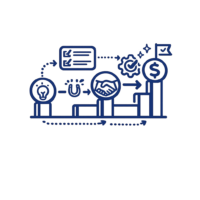
Lifecycle & Stage Definition
Define clear stages across your customer or operational lifecycle so work progresses consistently and nothing falls through the cracks.
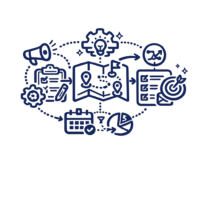
Marketing Process Development
Design repeatable processes for planning and executing marketing activities so efforts are consistent and efficient.
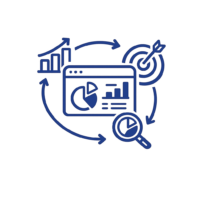
Metrics & Measurement Frameworks
Define what to measure and how to measure it so performance is clear, consistent, and actionable.
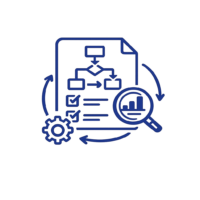
Process Documentation
Document workflows and systems so processes are clear, consistent, and easy to follow.
Role & Responsibility Definition
Clarify who owns what across processes so work is completed efficiently without overlap or gaps.
Workflow Design & Standardization
Turn inconsistent or ad hoc work into clear, repeatable workflows that improve efficiency and reduce friction.