
Process Documentation
Document workflows and systems so processes are clear, consistent, and easy to follow.
Process Documentation captures your workflows and systems so processes are clear, consistent, and easy to follow. It translates how work gets done into structured, accessible documentation that teams can reference and use in day-to-day execution. This ensures that processes are not just understood informally, but clearly defined and consistently applied.
Why This Matters
When processes live in people’s heads instead of documented systems, consistency becomes difficult to maintain. Work may be done differently depending on the individual, and onboarding new team members takes longer. Teams often rely on informal knowledge, which can lead to missed steps, inefficiencies, and confusion. As your organization grows, this lack of documentation creates more risk and slows down execution. Clear documentation makes processes easier to follow, repeat, and improve over time. It reduces reliance on specific individuals and helps ensure that work is done consistently across the team.
Signs You Could Benefit From This
- Processes are explained verbally rather than documented
- Work is done differently depending on the person
- Onboarding new team members takes longer than expected
- Teams frequently ask how to complete routine tasks
- Important steps are missed or inconsistently followed
- Knowledge is concentrated with a few individuals
- Documentation exists but is outdated or not used

How It Helps
Process Documentation creates a single source of truth for how work gets done. It provides clear, structured guidance that teams can rely on without needing to ask for clarification. This improves consistency and reduces errors. Teams can execute more confidently and efficiently with defined steps and expectations. With documentation in place, processes are easier to maintain, update, and scale as your business grows.
Our Approach
We start by reviewing your existing workflows and identifying where documentation is missing, unclear, or outdated. From there, we document processes in a way that reflects how work actually gets done. We focus on clarity, usability, and accessibility so documentation is easy to follow and maintain. The result is a set of practical resources that teams can use consistently in their day-to-day work.

Typical Deliverables
- Step-by-step process documentation
- Workflow diagrams and visual process maps
- Standard operating procedures (SOPs)
- System usage guides and instructions
- Centralized documentation structure or repository
- Templates for maintaining and updating documentation
- Supporting materials for onboarding and training
Frequently Asked Questions
Process documentation is the structured recording of how workflows and tasks are completed so they can be consistently followed and repeated.
Documentation typically includes step-by-step instructions, roles and responsibilities, required inputs, and expected outcomes.
It reduces time spent asking questions or figuring out steps, allowing teams to execute work more quickly and consistently.
Team members who perform the work should be involved to ensure documentation reflects real workflows and is practical to use.
It should be detailed enough to follow without confusion, but not overly complex or difficult to maintain.
Documentation should be reviewed and updated regularly as processes evolve.
It should be stored in a centralized, accessible location so teams can easily find and use it.
Clear documentation helps new team members learn processes faster and reduces reliance on others for training.
Related Services
Adoption & Expansion Materials
Create materials that support consistent usage and help teams fully adopt new systems and processes.

Clarity & Alignment Materials
Develop internal materials that ensure teams are aligned on messaging, processes, and priorities.
Content & Campaign Workflow Design
Create structured workflows for developing and executing campaigns so content is delivered consistently and with purpose.
CRM Configuration & Automation
Optimize your CRM to support your processes, reduce manual work, and ensure consistent data and activity tracking.
Decision Enablement Materials
Develop tools and frameworks that make it easier for teams to make consistent, informed decisions.
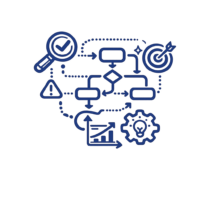
End-to-End Process Mapping
Map how work actually gets done across teams to identify gaps, inconsistencies, and opportunities for improvement.
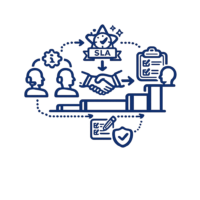
Handoff & SLA Design
Create structured handoffs and expectations between teams so work transitions smoothly without delays or confusion.

Lifecycle & Stage Definition
Define clear stages across your customer or operational lifecycle so work progresses consistently and nothing falls through the cracks.

Marketing Process Development
Design repeatable processes for planning and executing marketing activities so efforts are consistent and efficient.
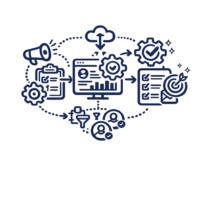
Marketing System Configuration & Automation
Structure and automate your marketing tools so campaigns and workflows scale without added complexity.

Role & Responsibility Definition
Clarify who owns what across processes so work is completed efficiently without overlap or gaps.
Training & Enablement
Equip teams with the knowledge and resources they need to confidently execute new processes and systems.
Workflow Design & Standardization
Turn inconsistent or ad hoc work into clear, repeatable workflows that improve efficiency and reduce friction.